import torch.nn as nn
#Add your model here
model = ...
...
print(model)Lab session: your first Neural Networks
PyTorch intro exercises
PyTorch intro exercises
1. Build a simple sequential model
- A model to classify clinical variables into a number possible outcomes
- Can you build a sequential model to reproduce the graph shown in the figure?
- Choose whatever activations you want, wherever possible
- How many outcomes/classes are we predicting?
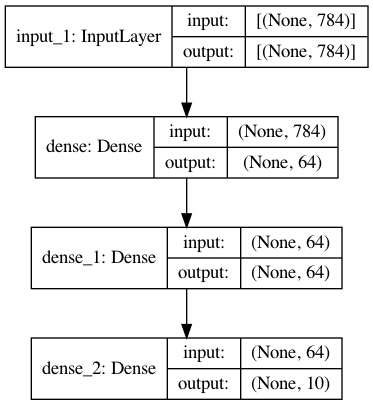
2. Build a better XOR classifier
Given the model seen at lecture, how do we make a better classifier (higher accuracy)?
- More layers? More neurons?
- Generate more data?
- More epochs?
- Different batch size?
- Different optimizer?
- It’s up to you! Let’s see who does best on validation
Only for Tuesday’s session:
- Different activations?
- Add Dropout? How large?
Plotting and training helper functions:
from typing import Optional
import plotly.graph_objects as go
from plotly.subplots import make_subplots

import torch
import torch.nn as nn
from torch.utils.data import TensorDataset, DataLoader
import torchmetrics

class LivePlot():
    def __init__(self, left_label="Loss", right_label="Accuracy"):
        self.fig = go.FigureWidget(
            make_subplots(specs=[[{"secondary_y": True}]])
        )
        self.fig.update_yaxes(title_text=left_label,  secondary_y=False)
        self.fig.update_yaxes(title_text=right_label, secondary_y=True)

        self.plot_indices = {}
        self.trace_secondary = {}
        display(self.fig)
        self.limits = [0, 0]
        self.current_x = 0

    def report(self, name: str, value: float, secondary_y: bool = False):
        try:
            plot_index = self.plot_indices[name]
        except KeyError:
            plot_index = len(self.fig.data)
            self.fig.add_scatter(
                y=[], x=[], name=name,
                secondary_y=secondary_y
            )
            self.plot_indices[name] = plot_index
            self.trace_secondary[name] = secondary_y
        self.fig.data[plot_index].y += (value,)
        self.fig.data[plot_index].x += (self.current_x,)

    def increment(self, n_ticks: int):
        self.limits[1] += n_ticks
        self.fig.update_layout(xaxis_range=self.limits)

    def set_limit(self, n_ticks: int):
        self.limits[1] = n_ticks
        self.fig.update_layout(xaxis_range=self.limits)

    def tick(self, n_ticks: Optional[int] = None):
        if n_ticks is None:
            n_ticks = 1
        self.current_x += n_ticks

def train(*,
          model: torch.nn.Module,
          train_loader: DataLoader,
          dev_loader: DataLoader,
          optimizer: torch.optim.Optimizer,
          criterion: torch.nn.Module,
          max_epochs: int,
          metric: Optional[torchmetrics.metric] = None,
          device: Optional[torch.device] = None,
          liveplot: Optional[LivePlot]=None):
    if device is None:
        device = torch.device('cuda') if torch.cuda.is_available() else torch.device('cpu')

    model.to(device)

    for epoch in range(max_epochs):
        training_loss_acc = 0
        training_examples = 0
        model.train()

        for i, batch in enumerate(train_loader):
            optimizer.zero_grad()

            x_batch, y_batch = batch
            x_batch = x_batch.to(device)
            y_hat = model(x_batch)

            loss = criterion(y_hat, y_batch.to(device))
            loss.backward()

            optimizer.step()
            training_loss_acc += loss.item()
            training_examples += x_batch.size(0)

        model.eval()
        with torch.no_grad():
            dev_loss_acc = 0
            dev_examples = 0
            dev_accuracy = 0
            for i, batch in enumerate(dev_loader):
                x_batch, y_batch = batch
                x_batch = x_batch.to(device)
                y_hat = model(x_batch)
                dev_loss_acc += criterion(y_hat, y_batch.to(device)).item()
                dev_examples += x_batch.size(0)
                if metric:
                    dev_accuracy += metric(torch.argmax(y_hat, -1), y_batch)

        if liveplot is not None:
            liveplot.tick() # Update the liveplot time
            liveplot.report("Training loss", training_loss_acc / training_examples)
            liveplot.report("Development loss", dev_loss_acc / dev_examples)
            if metric:
                liveplot.report("Development accuracy", dev_accuracy / (i+1), secondary_y=True)
Data generation step:
import numpy as np
# Generate XOR data
data = np.random.random((10000, 3)) - 0.5
labels = np.zeros((10000))

labels[np.where(np.logical_xor(np.logical_xor(data[:,0] > 0, data[:,1] > 0), data[:,2] > 0))] = 1

#let's print some data and the corresponding label to check that they match the table above
for x in range(3):
    print("{0: .2f} xor {1: .2f} xor {2: .2f} equals {3:}".format(data[x,0], data[x,1], data[x,2], labels[x]))
The baseline network to improve:
class MLP(torch.nn.Module):
    def __init__(self, input_dim, output_dim, hidden_dim):
        super().__init__()
        self.layers = nn.Sequential(
            nn.Linear(input_dim, hidden_dim),
            nn.Tanh(),
            nn.Linear(hidden_dim, output_dim),
        )
    def forward(self, x):
        y_hat = self.layers(x)
        return y_hat

# model from MLP class
model = MLP(input_dim=3, output_dim=2, hidden_dim=3)
epochs = 20

# define optimizer and loss function
learning_rate = 1e-3
optimizer = torch.optim.SGD(model.parameters(), lr=learning_rate)
criterion = nn.CrossEntropyLoss()
accuracy = torchmetrics.Accuracy(task='multiclass', num_classes=2, top_k=1)

# convert numpy arrays to torch tensors
tdata = torch.Tensor(data)
tlabels = torch.Tensor(labels).long()
dataset = TensorDataset(tdata, tlabels)

# split the data randomly
total_samples = data.shape[0]
train_samples = int(total_samples * 0.9)
train_set, dev_set = torch.utils.data.random_split(dataset, [train_samples, total_samples-train_samples])

# shuffle data at training time
train_loader = DataLoader(train_set, batch_size=32, shuffle=True)
dev_loader = DataLoader(dev_set, batch_size=32)

# Setup plot
liveplot = LivePlot()
liveplot.increment(epochs)

train(model=model,
      train_loader=train_loader,
      dev_loader=dev_loader,
      optimizer=optimizer,
      criterion=criterion,
      metric=accuracy,
      max_epochs=epochs,
      liveplot=liveplot,
      device=torch.device('cuda') if torch.cuda.is_available() else torch.device('cpu'))
#Add your code here3. Build a regression model
- Take the Boston housing dataset (http://lib.stat.cmu.edu/datasets/boston)
- Records a set of variables for a set of houses in Boston, including among others:
- CRIM per capita crime rate by town
- ZN proportion of residential land zoned for lots over 25,000 sq.ft.
- INDUS proportion of non-retail business acres per town
- CHAS Charles River dummy variable (= 1 if tract bounds river; 0 otherwise)
- NOX nitric oxides concentration (parts per 10 million)
- RM average number of rooms per dwelling
- Can we use these variables to predict the value of a house (in tens of thousands of dollars)?
Download the data:
!mkdir -p data
!wget -P ./data/ https://github.com/selva86/datasets/raw/refs/heads/master/BostonHousing.csv!ls data/Load the data with pandas:
import torch
import torch.nn as nn
from sklearn.preprocessing import StandardScaler # hint

data = pd.read_csv("data/BostonHousing.csv")
print(data.head())
data = np.array(data)
print(f"Data shape is: {data.shape}")

train_samples = int(data.shape[0] * 0.9)
train_x = data[:train_samples, :13]
train_y = data[:train_samples, 13:]

dev_x = data[train_samples:, :13]
dev_y = data[train_samples:, 13:]

train_set = TensorDataset(torch.Tensor(train_x), torch.Tensor(train_y))
dev_set = TensorDataset(torch.Tensor(dev_x), torch.Tensor(dev_y))

# shuffle data at training time
train_loader = DataLoader(train_set, batch_size=32, shuffle=True)
dev_loader = DataLoader(dev_set, batch_size=32)
class MLP(torch.nn.Module):
def __init__(self, input_dim, output_dim, hidden_dim):
super().__init__()
self.layers = nn.Sequential(
nn.Linear(input_dim, hidden_dim),
nn.Tanh(),
nn.Linear(hidden_dim, output_dim),
)
def forward(self, x):
y_hat = self.layers(x)
return y_hat
# model from MLP class
model = ...
epochs = ...
# define optimizer and loss function
optimizer = ...
# https://docs.pytorch.org/docs/stable/nn.html#loss-functions
criterion = ...
# Setup plot
liveplot = LivePlot()
liveplot.increment(epochs)
train(model=model,
train_loader=train_loader,
dev_loader=dev_loader,
optimizer=optimizer,
criterion=criterion,
max_epochs=epochs,
liveplot=liveplot,
device=torch.device('cuda') if torch.cuda.is_available() else torch.device('cpu'))4. The IMDB movie review sentiment dataset
This dataset contains 50k reviews for movies in IMDB, split into a train and test set of equal size. You want to predict whether the review is positive or negative.
Download the raw data and read it into a data structure:
!mkdir -p data
!wget -P ./data https://ai.stanford.edu/~amaas/data/sentiment/aclImdb_v1.tar.gz
!tar -C ./data -zxf ./data/aclImdb_v1.tar.gz
Load the dataset:
import os
import glob

def imdb_dataset(directory='data/',
                 train=False,
                 test=False,
                 train_directory='train',
                 test_directory='test',
                 extracted_name='aclImdb',
                 check_files=['aclImdb/README'],
                 sentiments=['pos', 'neg']):
    """
    Returns:
        :class:`tuple` of :class:`iterable` or :class:`iterable`:
        Returns between one and all dataset splits (train, dev and test) depending on if their
        respective boolean argument is ``True``.

    Example:
        [{
          'text': 'For a movie that gets no respect there sure are a lot of memorable quotes...',
          'sentiment': 'pos'
        }, {
          'text': 'Bizarre horror movie filled with famous faces but stolen by Cristina Raines...',
          'sentiment': 'pos'
        }]
    """

    ret = []
    splits = [
        dir_ for (requested, dir_) in [(train, train_directory), (test, test_directory)]
        if requested
    ]
    for split_directory in splits:
        full_path = os.path.join(directory, extracted_name, split_directory)

        examples = []
        for sentiment in sentiments:
            for filename in glob.iglob(os.path.join(full_path, sentiment, '*.txt')):
                with open(filename, 'r', encoding="utf-8") as f:
                    text = f.readline()
                examples.append({
                    'text': text,
                    'sentiment': sentiment,
                })
        ret.append(examples)

    if len(ret) == 1:
        return ret[0]
    else:
        return tuple(ret)

train_data = imdb_dataset(train=True)len(train_data[0]['text'])How do we build a predictor for this task?
...