State of the Earth research

A plenary discussion about the state of the planet
About

Initiative

Start a regularly occurring activity at the NBIS retreats where we together increase our awareness of the pressures on the environment caused by human societies.

About

Motivation #1: We are already spending time on this

Intersection with NBIS support:

  • Climate (biodiversity patterns, resilience, evolution)
  • Biosphere integrity (biodiversity loss, genetic diversity)
  • Novel entities (chemical exposure & human health)
  • Land system change (forest communities, carbon sequestration)
  • etc

About

Motivation #2: Public outreach

Photo by Kenny Eliason on Unsplash

The importance of scientific communication to build public trust, maximize societal impact, foster informed decision-making and promote evidence-based policies is highlighted in the strategies of Swedish universities, VR, NBIS and SciLifeLab.

About

Motivation #3: Confidence
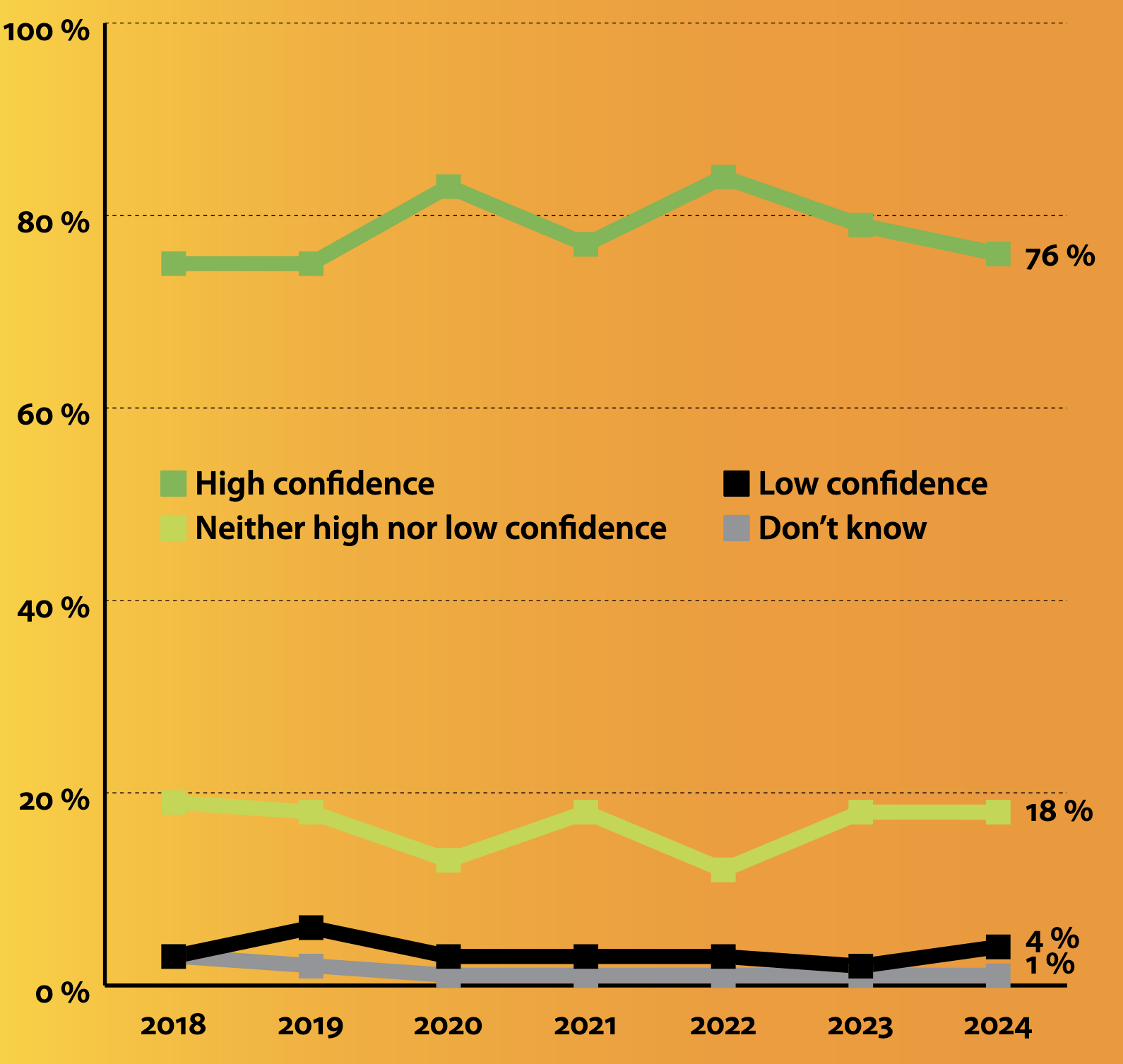
“VA Barometer 2024/2025 in English” Vetenskapallmanhet.se, 2025

The public has high confidence in research

About

Motivation #3: Confidence

“VA Barometer 2024/2025 in English” Vetenskapallmanhet.se, 2025

The public has high confidence in research…and believe our opinions contribute to better policymaking.

A majority (66 percent) believe that researchers should express their opinions on political issues related to their research … Over half of those who support researchers sharing their opinions believe that it contributes to better policymaking.

Session format

Friendly discussions of a topic of interest.

  • What’s the scope of the problem?
  • What do we know from the current science, and what do we see in our support projects that are relevant to the problem?
  • What would it take to alleviate the impacts/come to terms with the issue?

Code of conduct

These are very complex wide-boundary problems and topics.

  • no one has all the answers
  • we can learn from each other
  • agree to disagree and be kind to those who hold different opinions

Layout

  • Mentimeter questions on some topic to gauge what people think
  • A couple of slides with facts that aim to further the discussion

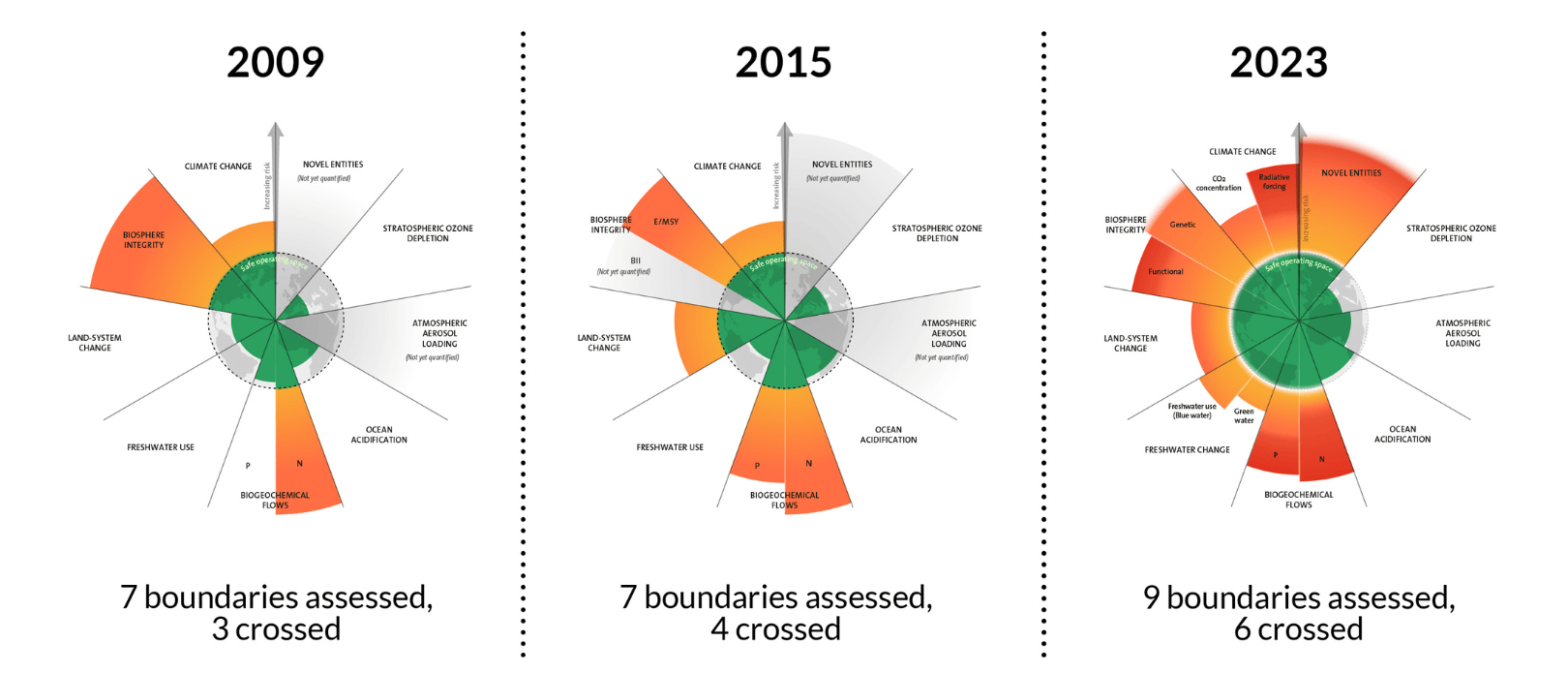
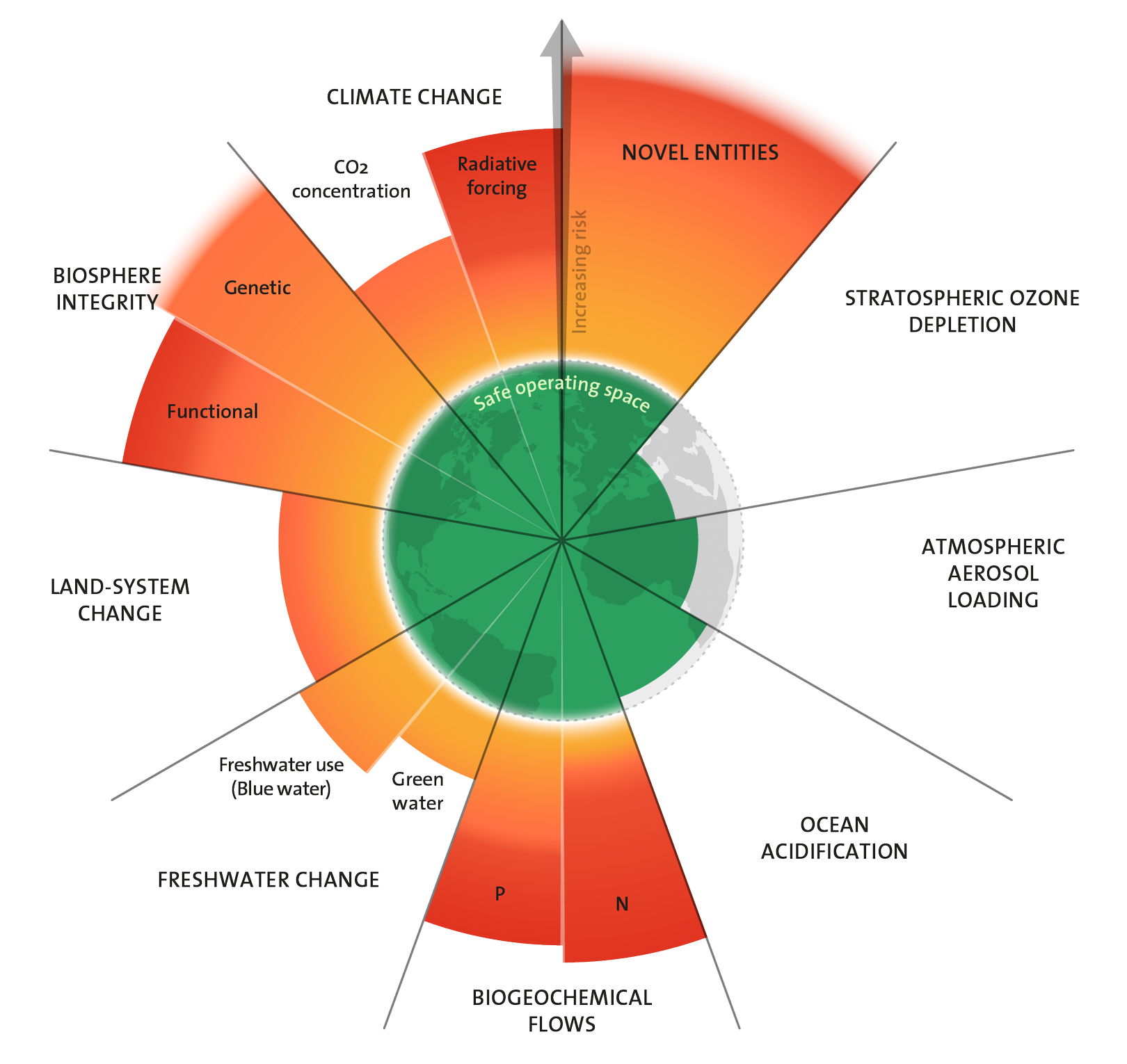
Planetary boundaries - how it’s going

Richardson et al. Science Advances, 9(37), eadh2458, 2023
Planetary Boundaries 2012

Transgressing the boundaries

Today, human activities with planetary-scale effects act as additional forcing on Earth system. Richardson et al. Science Advances, 9(37), eadh2458, 2023

The remarkable explosion of the human enterprise from the mid-20th century, and the associated global-scale impacts on many aspects of Earth System functioning, mark the second stage of the Anthropocene - the Great Acceleration. Steffen et al. Ambio-Journal of Human Environment Research and Management, 36(8), 614–621, 2007

The Great Acceleration

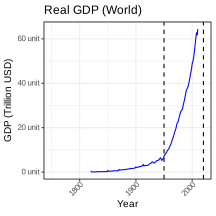
Gross Domestic Product - an indicator of human activity

Hasell et al. Our World in Data, 2022

Ritchie et al. Our World in Data, 2023

Growth in human activity has resulted in huge improvements in living standards, but has also had severe negative effects.

Question: Where are we heading?

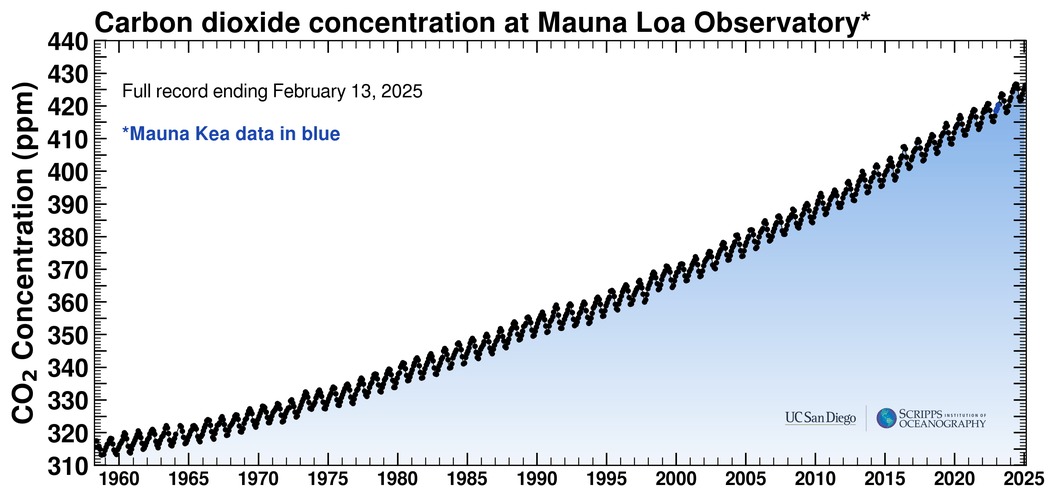
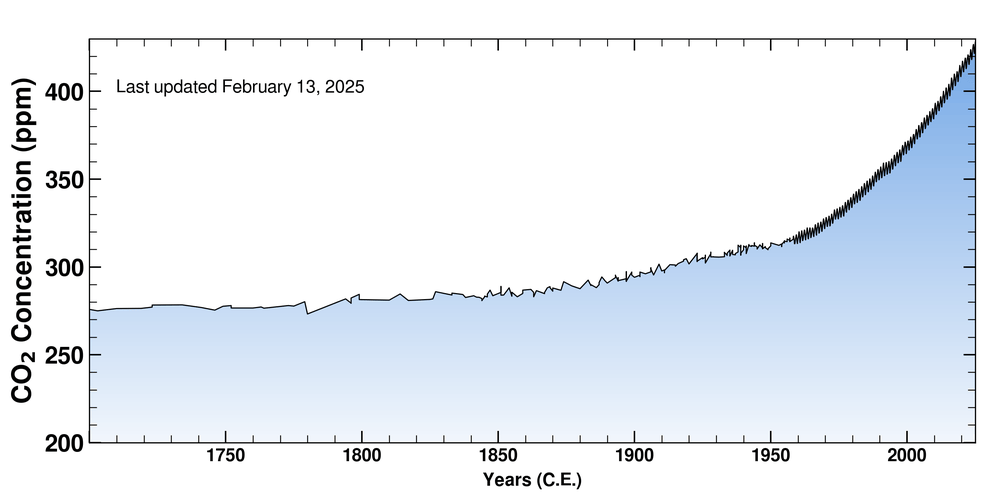
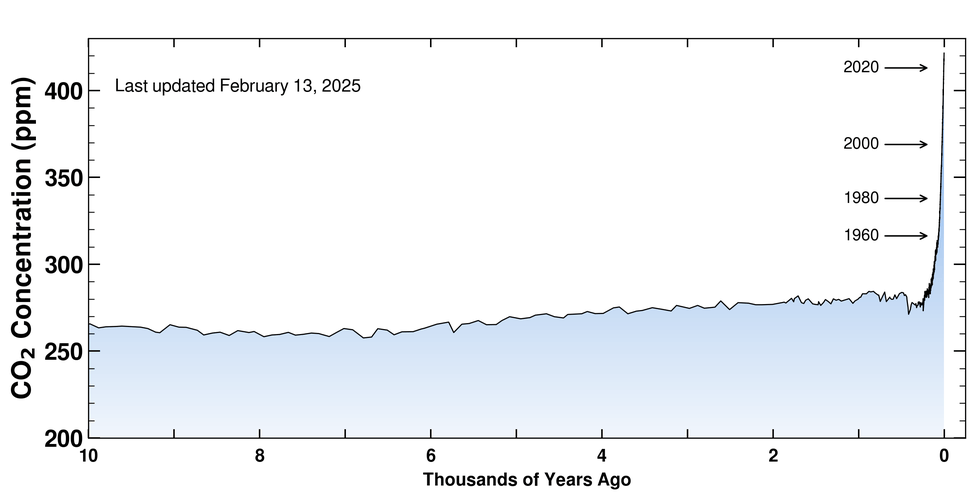
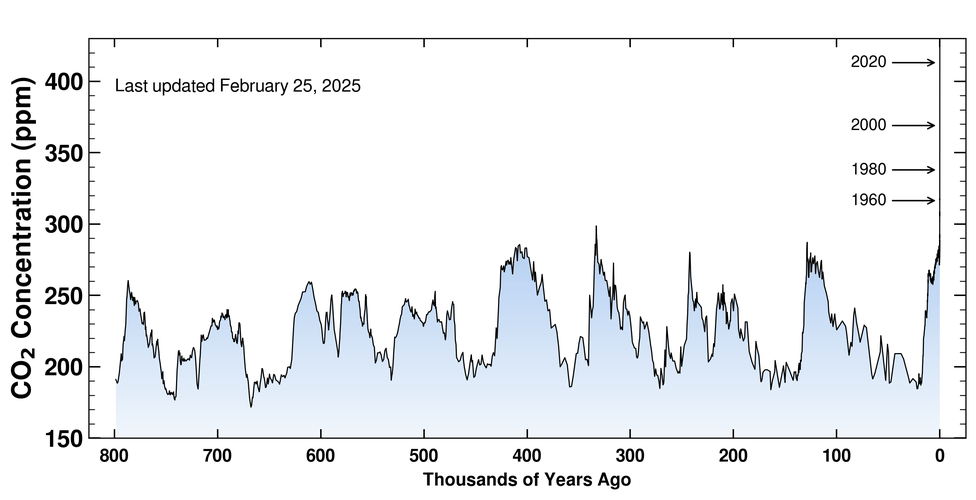
Perspective: CO2

Fun (?) fact: we are currently emitting CO2 at a rate that is estimated to be 10-50 times higher than that which caused the mother of all extinctions, the Permian mass extinction 252 MYA

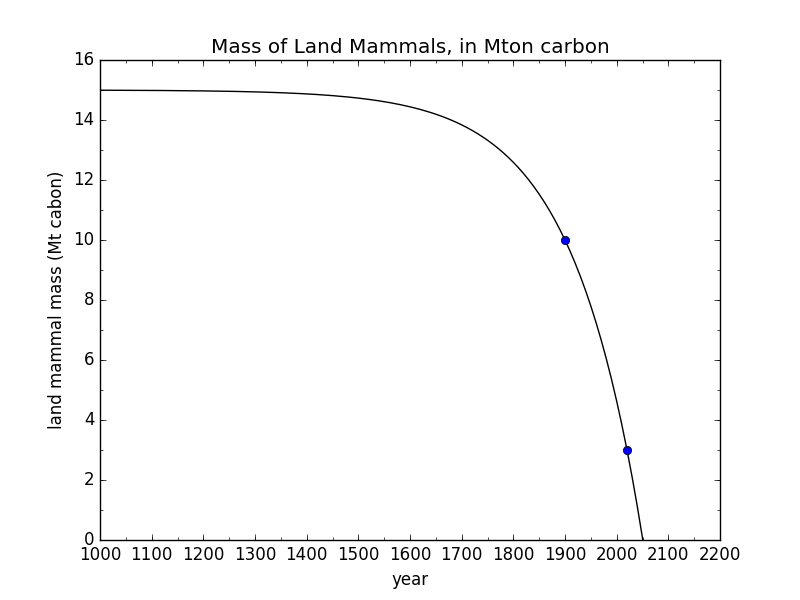
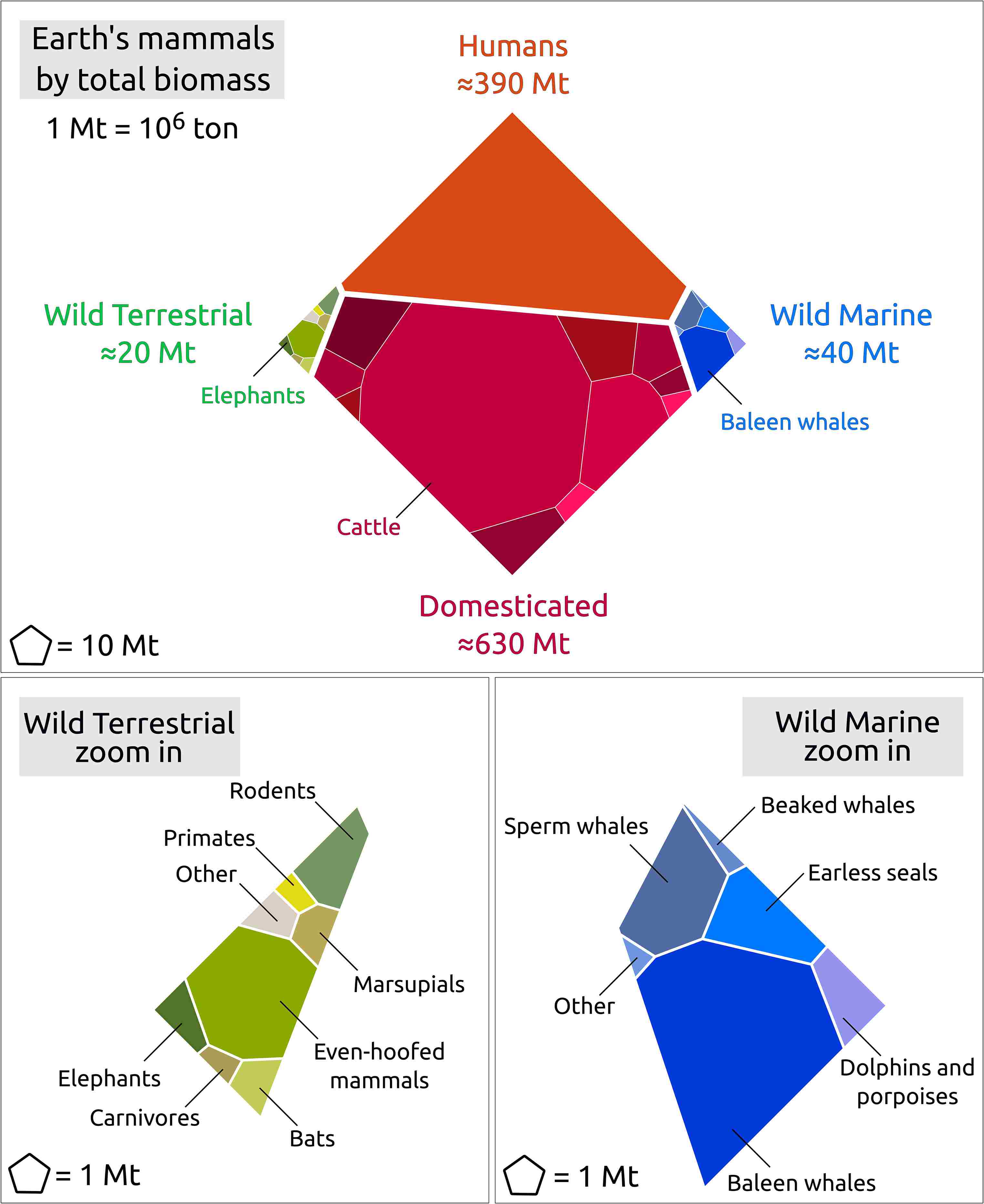
Perspective: Biodiversity
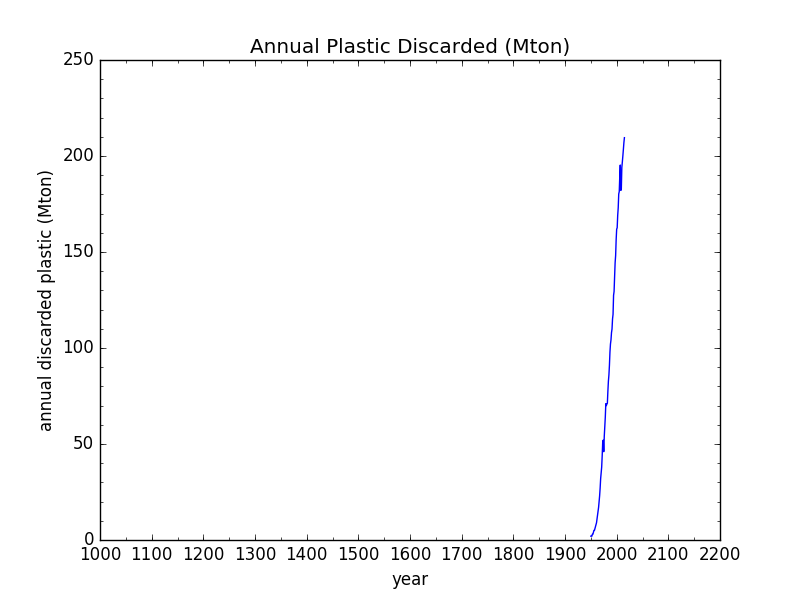
Perspective: Novel entities

Murphy, Tom 2022

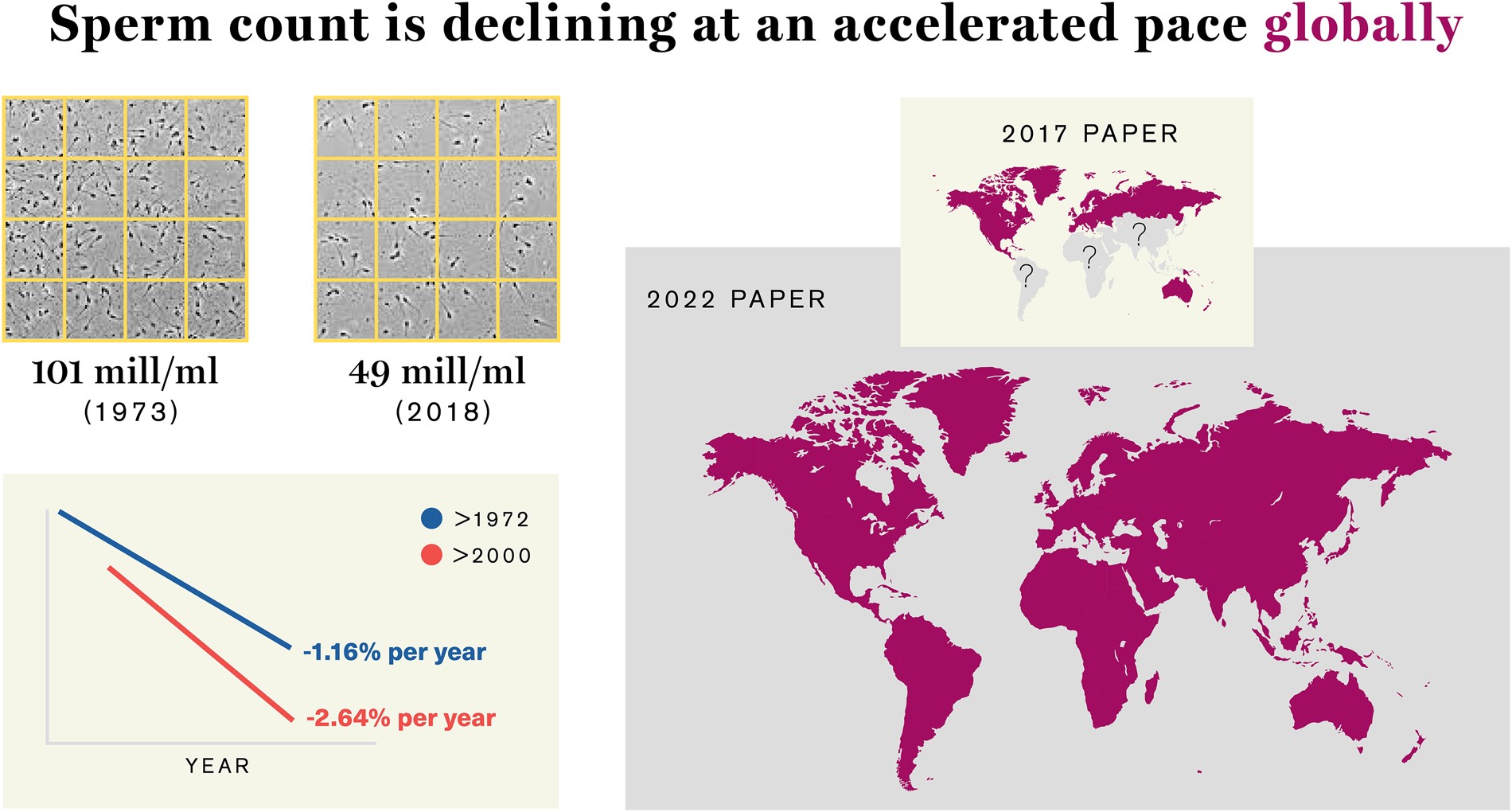
Perspective: Human health
What is our role? Science and neutrality

Remain neutral?

I am foremost concerned by an increasing number of climate scientists becoming climate activists, because scholars should not have a priori interests in the outcome of their studies

Büntgen, U. (2024). The importance of distinguishing climate science from climate activism. Büntgen, Npj Climate Action, 3(1), 1–2, 2024

Or engage actively?

… motivations for engaging in research, advocating for funding, being interested in achieving a successful outcome (including rejoicing when the experiment actually works), and wanting to contribute to scientific knowledge are all forms of having ‘interests in the outcome of studies.’ What scientist undertakes research where they have no interest whatsoever in the outcome?

van Eck, C. W., Messling, L., & Hayhoe, K. (2024). Challenging the neutrality myth in climate science and activism. van Eck et al., Npj Climate Action, 3(1), 1–3, 2024

What is our role? Science and neutrality

Shout out to all the fuckwits who told me, two months ago, that scientists must strive to remain apolitical.

— Carl T. Bergstrom (carlbergstrom.com?) February 1, 2025 at 6:14 AM

Trump 2.0: An Assault on Science Anywhere Is an Assault on Science Everywhere “Trump 2.0,” Nature, 2025

US President Donald Trump is taking a wrecking ball to science and to international institutions. The global research community must take a stand against these attacks.

Varför tar forskare inte större plats i samhällsdebatten? 2025
Summary

Topic ideas

The examples we present are a subset from a wide variety of topics where we should aim to keep up to date or need at least a cursory knowledge

  • Biodiversity loss
  • Chemical pollutants and human health
  • Energy use and renewables
  • Land use/deforestation and eutrophication
  • Exponential-growth on a finite planet
  • Technical innovation and progress
  • Climate change and life on a hotter planet
  • etc.

Summary

How is this relevant for NBIS?

Professional development/Keeping ahead of the curve

  • These things affect all our fields
  • Systems thinking and interdisciplinary studies will become more and more important

Molecular and predictive understanding of living systems will allow to address health and environmental changes

Integrated Data Services presentation, NBIS Retreat March 2025

Outreach

  • We need to know what to communicate, and how
  • We, in our role as experts, need to know what we know before reaching out

Bibliography

Büntgen, U. (2024). The importance of distinguishing climate science from climate activism. Npj Climate Action, 3(1), 1–2. https://doi.org/10.1038/s44168-024-00126-0
Cui, Y., Kump, L. R., & Ridgwell, A. (2013). Initial assessment of the carbon emission rate and climatic consequences during the end-Permian mass extinction. Palaeogeography, Palaeoclimatology, Palaeoecology, 389, 128–136. https://doi.org/10.1016/j.palaeo.2013.09.001
Greenspoon, L., Krieger, E., Sender, R., Rosenberg, Y., Bar-On, Y. M., Moran, U., Antman, T., Meiri, S., Roll, U., Noor, E., & Milo, R. (2023). The global biomass of wild mammals. Proceedings of the National Academy of Sciences, 120(10), e2204892120. https://doi.org/10.1073/pnas.2204892120
Hasell, J., Roser, M., Ortiz-Ospina, E., & Arriagada, P. (2022). Poverty. Our World in Data.
Levine, H., Jørgensen, N., Martino-Andrade, A., Mendiola, J., Weksler-Derri, D., Jolles, M., Pinotti, R., & Swan, S. H. (2023). Temporal trends in sperm count: A systematic review and meta-regression analysis of samples collected globally in the 20th and 21st centuries. Human Reproduction Update, 29(2), 157–176. https://doi.org/10.1093/humupd/dmac035
Monroe, R. (n.d.). The Keeling Curve. In The Keeling Curve. Retrieved February 13, 2025, from https://keelingcurve.ucsd.edu
Murphy, Tom. (2022). Death by Hockey Sticks Do the Math. https://dothemath.ucsd.edu/2022/09/death-by-hockey-sticks/
Murphy, Tom. (2023). Ecological Cliff Edge Do the Math. https://dothemath.ucsd.edu/2023/08/ecological-cliff-edge/
Planetary boundaries. (2012). [Text]. https://www.stockholmresilience.org/research/planetary-boundaries.html
Richardson, K., Steffen, W., Lucht, W., Bendtsen, J., Cornell, S. E., Donges, J. F., Drüke, M., Fetzer, I., Bala, G., von Bloh, W., Feulner, G., Fiedler, S., Gerten, D., Gleeson, T., Hofmann, M., Huiskamp, W., Kummu, M., Mohan, C., Nogués-Bravo, D., … Rockström, J. (2023). Earth beyond six of nine planetary boundaries. Science Advances, 9(37), eadh2458. https://doi.org/10.1126/sciadv.adh2458
Ritchie, H., Rosado, P., & Roser, M. (2023). Agricultural production. Our World in Data.
Steffen, W., Broadgate, W., Deutsch, L., Gaffney, O., & Ludwig, C. (2015). The trajectory of the Anthropocene: The Great Acceleration. The Anthropocene Review, 2(1), 81–98. https://doi.org/10.1177/2053019614564785
Steffen, W., Crutzen, P. J., McNeill, J. R., et al. (2007). The anthropocene: Are humans now overwhelming the great forces of nature. Ambio-Journal of Human Environment Research and Management, 36(8), 614–621.
Trump 2.0: An assault on science anywhere is an assault on science everywhere. (2025). Nature. https://doi.org/10.1038/d41586-025-00562-w
VA barometer 2024/2025 in english. (2025). In vetenskapallmanhet.se. {https://vetenskapallmanhet.se/2025/01/va-barometer-2024-2025-in-english/}
van Eck, C. W., Messling, L., & Hayhoe, K. (2024). Challenging the neutrality myth in climate science and activism. Npj Climate Action, 3(1), 1–3. https://doi.org/10.1038/s44168-024-00171-9
Varför tar forskare inte större plats i samhällsdebatten? Tidningen Curie. (2025). [{Text}]. https://www.tidningencurie.se/kronikor/varfor-tar-forskare-inte-storre-plats-i-samhallsdebatten
Wu, Y., Chu, D., Tong, J., Song, H., Dal Corso, J., Wignall, P. B., Song, H., Du, Y., & Cui, Y. (2021). Six-fold increase of atmospheric pCO2 during the PermianTriassic mass extinction. Nature Communications, 12(1), 2137. https://doi.org/10.1038/s41467-021-22298-7
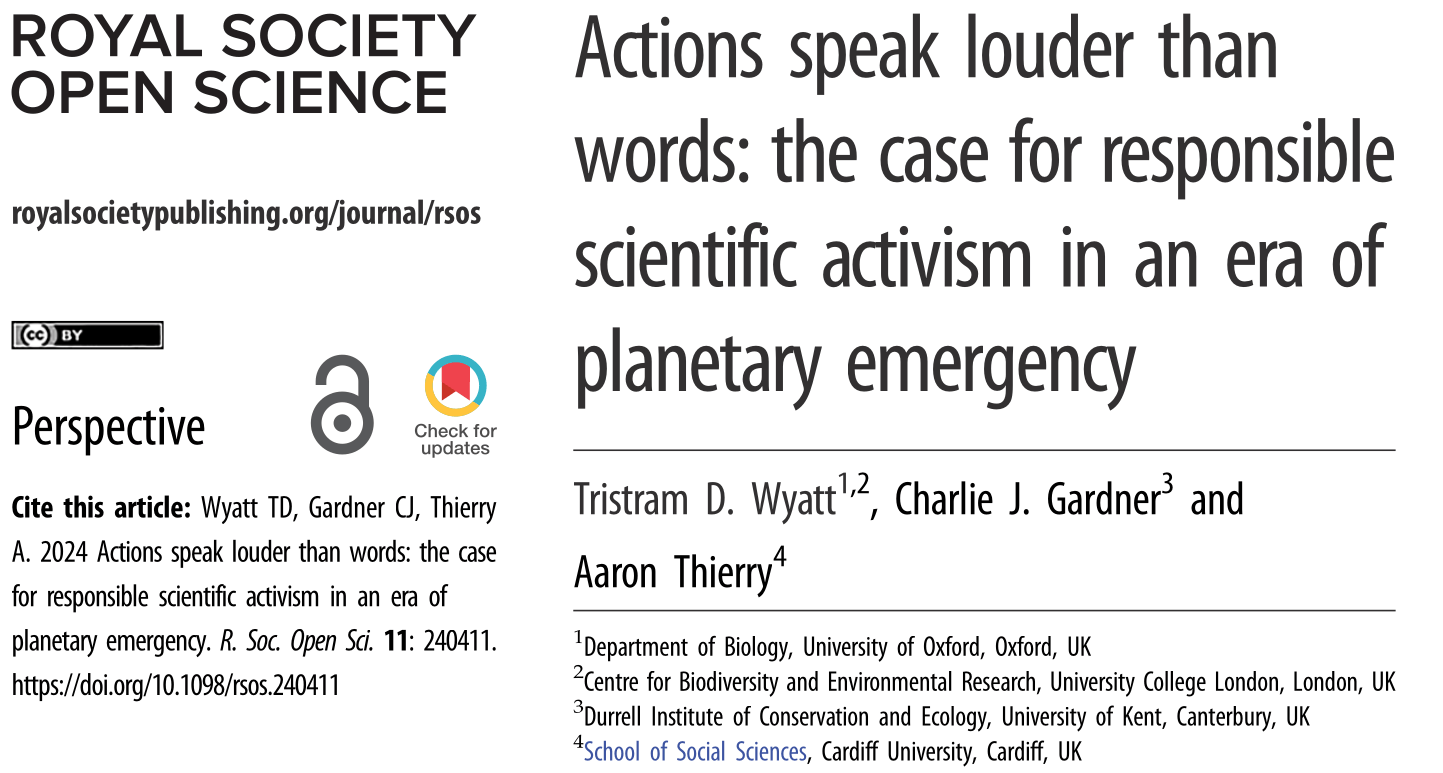
Wyatt, T. D., Gardner, C. J., & Thierry, A. (2024). Actions speak louder than words: The case for responsible scientific activism in an era of planetary emergency. Royal Society Open Science, 11(7), 240411. https://doi.org/10.1098/rsos.240411